Understanding the CP508C Notice: Safeguard Your Passport and Travels
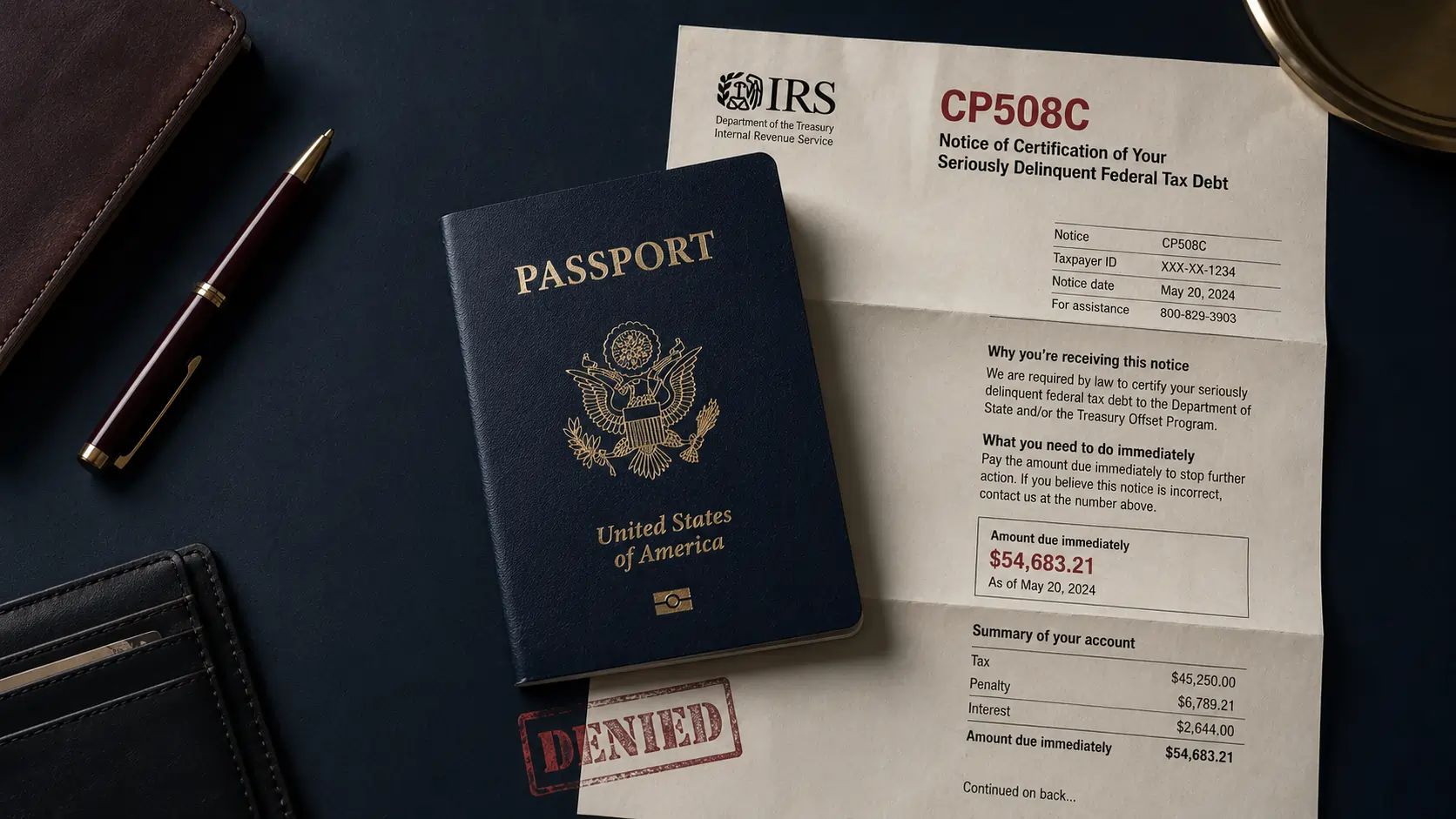
Receiving a CP508C notice signifies the presence of a seriously delinquent tax obligation, which could lead to the denial or revocation of your passport. It is imperative to grasp the ramifications of this certification, especially for individuals who intend to travel. Failing to heed the IRS communication may threaten your passport application or renewal process, worrying both your business and personal agendas. At Edward Parsons, CPA, we are dedicated to assisting our clients in maneuvering through the intricate world of IRS compliance, particularly related to CP508C scenarios. Our mission is to help you overturn this certification and discuss various strategies for managing your seriously delinquent tax debt efficiently. Regardless of your situation, we offer prompt assistance so your travel expeditions can continue without a hitch.
Article
Our core competencies

Decoding the CP508C Notice
The CP508C notice from the IRS alerts taxpayers about their seriously delinquent tax debts, potentially risking passport denial or cancellation. The IRS regards seriously delinquent tax debt as owing more than $52,000 in overdue taxes, interest, and penalties—an issue that can greatly hinder international travels. Should you find yourself in this predicament, understanding the seriousness and acting swiftly is critical.
Learn More →
Reversing the CP508C Certification and Available Solutions
To overturn a CP508C certification, it's essential to tackle the related tax debts with urgency. There are various pathways clients can take, such as negotiating for repayment plans, potentially lowering the debt through discussion, or investigating offers in compromise. Collaborating with an accomplished CPA like Edward Parsons can streamline this process and keep your travel plans intact.
Learn More →
Immediate Assistance for Your Travel Arrangements
In scenarios where a CP508C notice jeopardizes your travel intentions, urgent consultation with a tax professional is vital. At Edward Parsons, CPA, we manage pressing IRS compliance matters addressing clients’ travel concerns. Our firm constructs a definitive strategy ensuring compliance and reinstating your passport rights, allowing you to focus on your impending journeys peacefully.
Learn More →Common Questions
A CP508C notice indicates the existence of seriously delinquent tax debts, leading to possible IRS passport denial or invalidation.
To reverse a CP508C certification, it's necessary to either pay off the seriously delinquent tax debt or initiate an installment agreement with the IRS.
Seriously delinquent tax debt typically involves amounts exceeding $52,000, including taxes, penalties, and accrued interest owed to the IRS.
Having a CP508C notice might mean that traveling isn’t advisable, so it's essential to resolve the tax issue before planning any trips.
If complete payment is unfeasible, consider alternatives such as installment plans, offers in compromise, or enlisting a CPA's help.